005 / Work
Retro Pinball PCB
A control-board engineering project for a classic pinball machine used in a national retro games venue — from fault diagnosis and reverse engineering through to replacement electronics, integration and bench testing.
The work
Built around
the system.
This was not a cosmetic restoration. The job was to understand an ageing electromechanical system properly, preserve the behaviour that gives the machine its character, and make the electronics dependable and serviceable enough for repeated public use.
Keep the classic. Fix the fragile bits.
A national retro games bar had a classic pinball machine that was no longer operating reliably. Getting it to boot once was not enough: it needed to stand up to repeated public use and remain practical to maintain when something eventually needed attention again.
That meant treating the machine as a complete system rather than swapping parts until the symptoms disappeared.
Understand the machine before redesigning it.
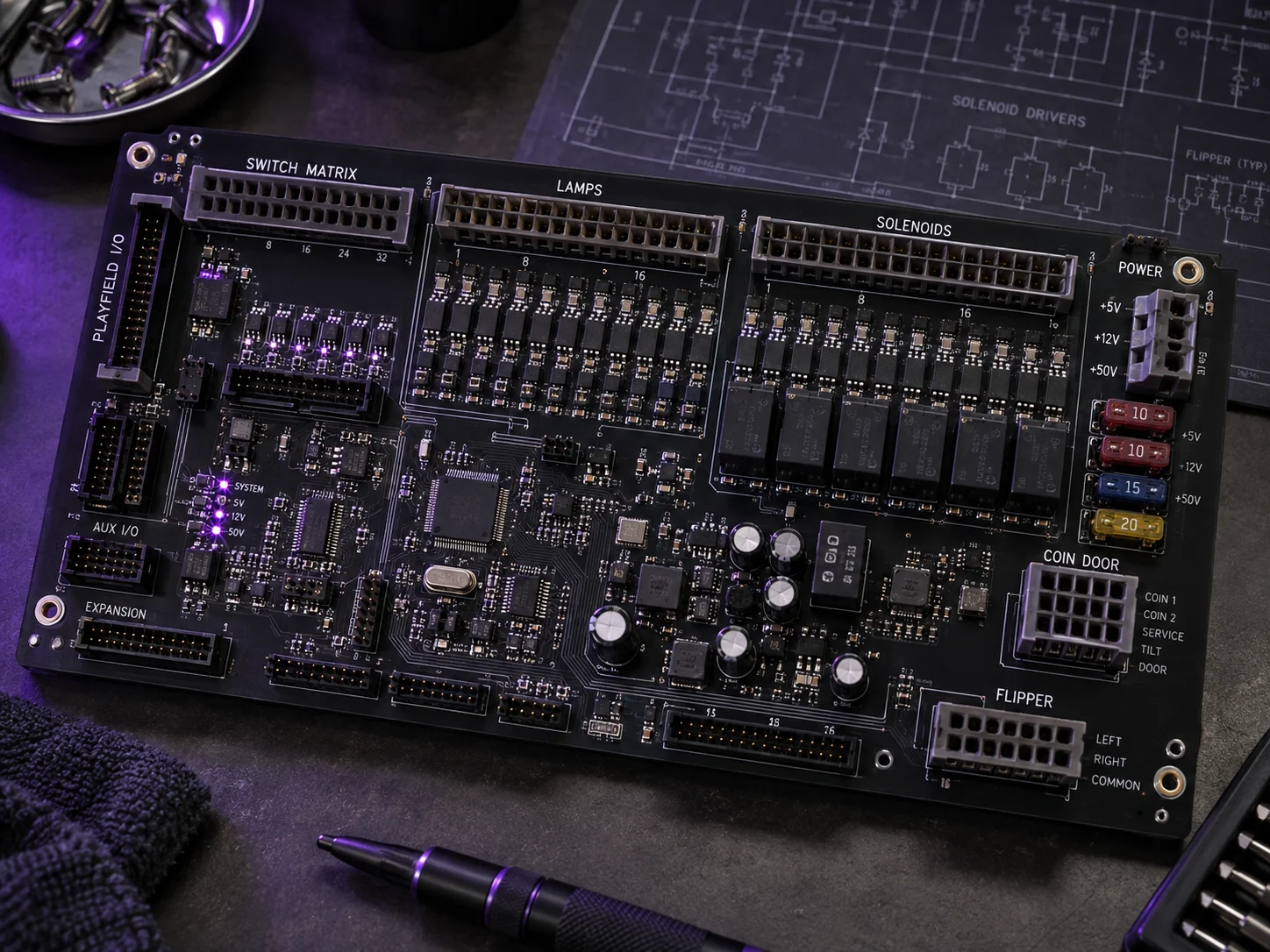
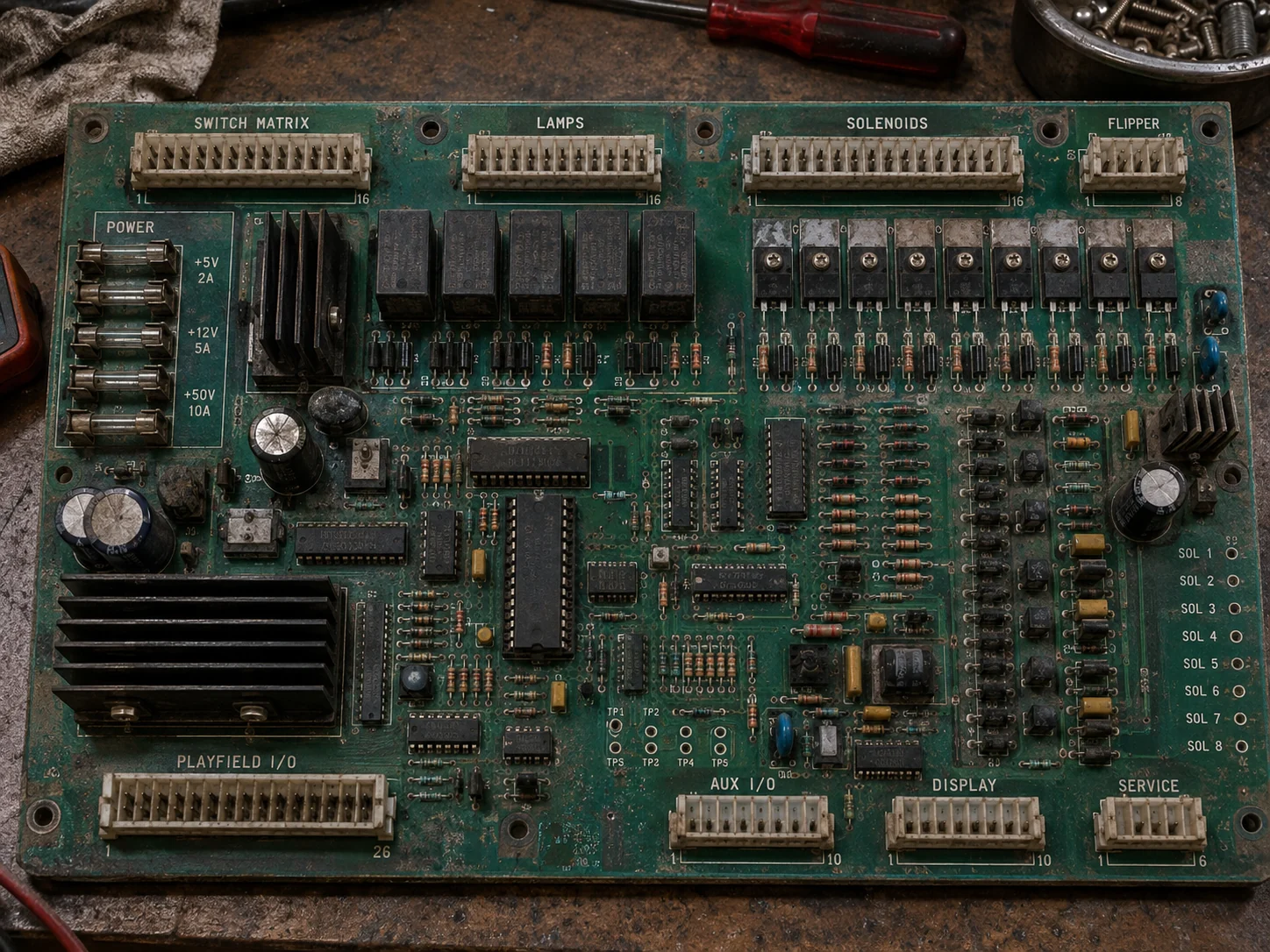
We worked through the original electronics, traced faults and mapped the interfaces between the control hardware and the machine itself: switch matrices, lamps, solenoids, flippers, power rails and playfield I/O.
Reverse engineering those behaviours gave us a reliable reference for deciding what should be retained, what should be replaced and where modern electronics could improve long-term serviceability.
Modern electronics, legacy behaviour.
The replacement-board approach uses modern components and protection while respecting the electrical and mechanical constraints of the original machine. Connectors and I/O are organised around the real playfield rather than forcing the cabinet to adapt to an unrelated generic controller.
The aim was not to turn the machine into something new. It was to give the existing machine a more dependable control layer.
Bench first. Venue second.
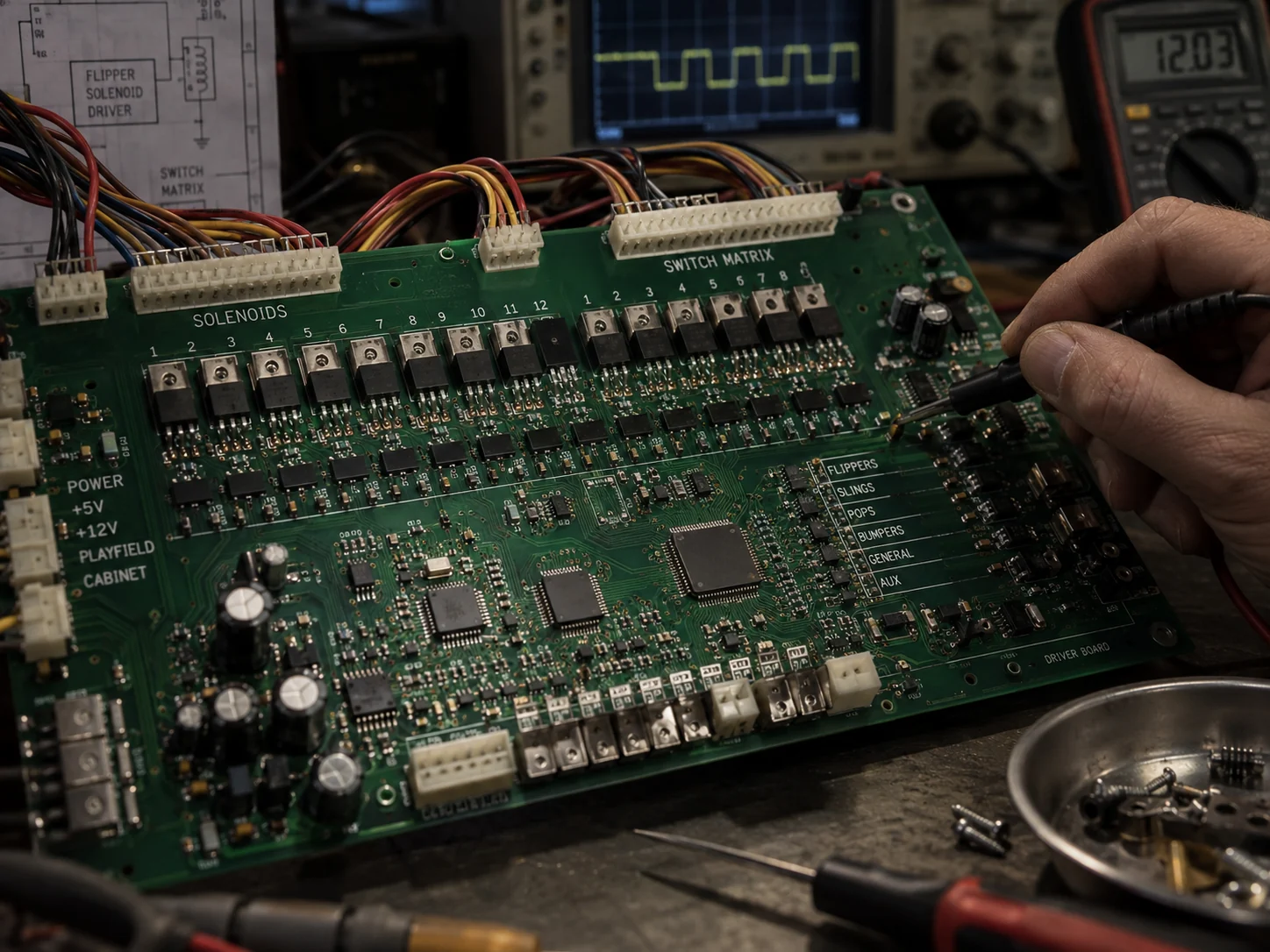
Inputs, outputs and driver behaviour were checked on the bench before returning the system to the machine. That included validating control logic, power behaviour and the loads that matter in a pinball cabinet rather than treating a successful power-on as the finish line.
Repeated testing matters here because public venue hardware has a much harder life than a collector machine switched on occasionally at home.
Back in play, easier to live with.
The machine returned to service with a more reliable and maintainable electronics platform while preserving the mechanical feel and behaviour that made the original worth keeping.
It is a neat example of the kind of engineering we like most: software, electronics and physical systems meeting in one problem, with no artificial boundary between them.
In the field
Next / Start something
Got something
interesting?
Software, hardware, infrastructure or something in between.
[email protected] ↗