006 / Work
Commercial Operations Platform
A business-wide integration programme centred on Salesforce: migrating the commercial pipeline out of disconnected processes, then connecting the systems that sales, operations, inventory, contractors and onboarding already depended on.
The work
Built around
the system.
The value was not in installing a CRM in isolation. It was in making Salesforce part of the operating model — designing the data relationships, migrating the pipeline, integrating specialist systems and automating the hand-offs that previously depended on people moving information between platforms.
One pipeline. Several operational realities.
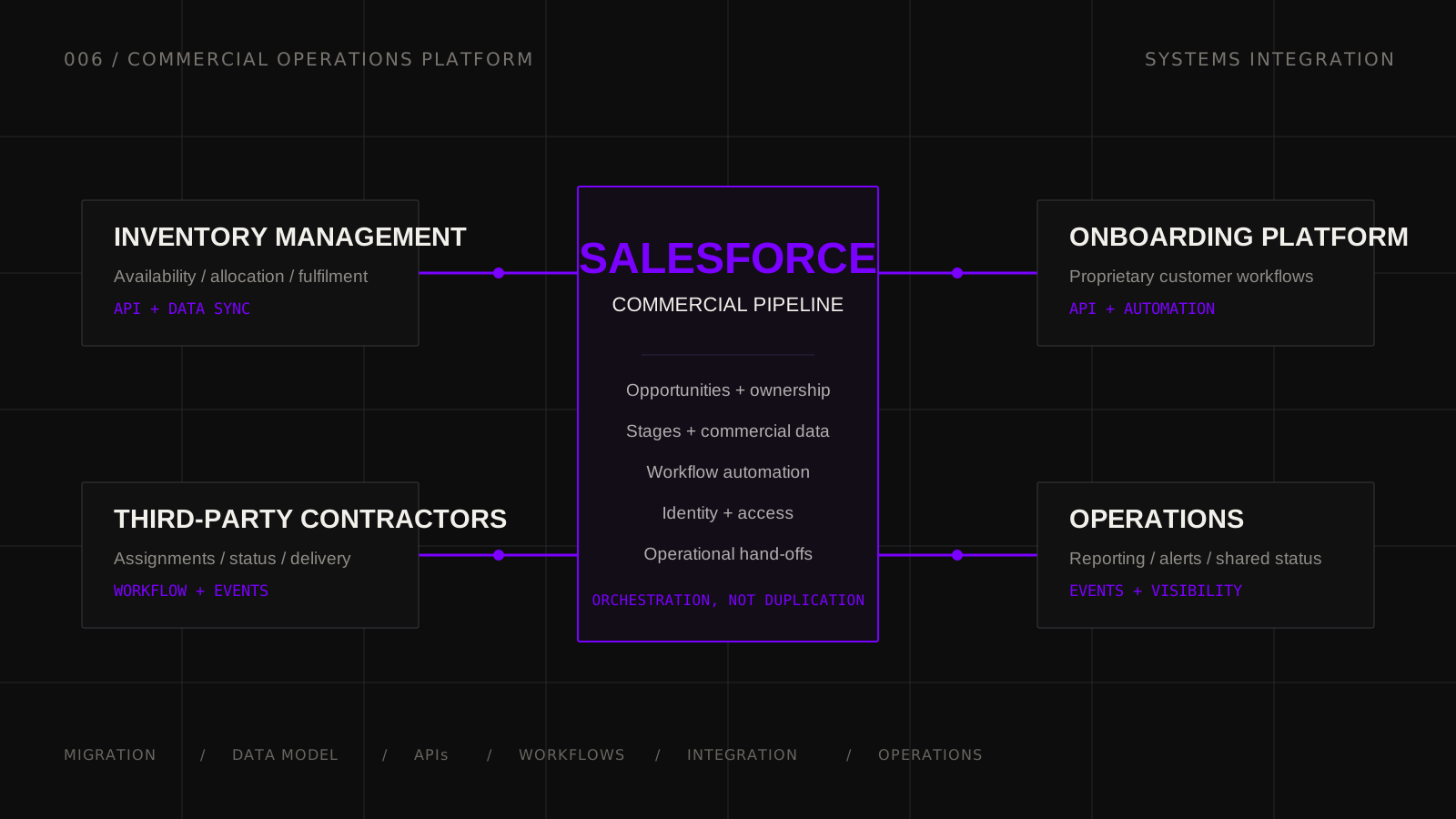
The commercial process crossed more systems than the sales team could see from any one screen. Pipeline data, inventory availability, third-party contractor activity and proprietary onboarding workflows all lived in separate places, with people bridging the gaps manually.
The brief was to move the commercial pipeline into Salesforce without pretending the rest of the business could simply be replaced by it.
Move the process, not just the records.
We modelled the commercial workflow in Salesforce, mapped existing data into the new structure and migrated the active pipeline with the relationships needed for the business to keep operating around it.
That meant treating migration as an operational change rather than a CSV import: ownership, stages, identifiers and downstream dependencies all had to survive the move.
Salesforce at the centre, not on an island.
The new pipeline was connected to inventory management, third-party contractor processes and proprietary onboarding platforms through APIs, workflow automation and controlled data synchronisation.
Each system kept responsibility for the data it was best placed to own, while Salesforce became the commercial view and orchestration point rather than a second copy of everything.
A commercial process that can move without re-keying itself.
Sales and operations gained a shared flow from opportunity through operational fulfilment and onboarding, with fewer manual hand-offs between teams and systems.
More importantly, the integration architecture left the specialist platforms intact. The business gained a coherent operating layer without throwing away systems that were already doing useful work.
Next / Start something
Got something
interesting?
Software, hardware, infrastructure or something in between.
[email protected] ↗